Your entire home is resting on a few dozen squares of concrete or plastic, most of them smaller than a pizza box. That’s not an exaggeration. Every pound of your mobile home travels down through the frame, into the piers, and onto the mobile home pier pads sitting in the dirt underneath.
If those pads are the wrong size, the wrong material, or sitting on soft Florida sand, the whole system slowly sinks. Doors stop latching. Floors dip. And the releveling bill grows every year you wait.
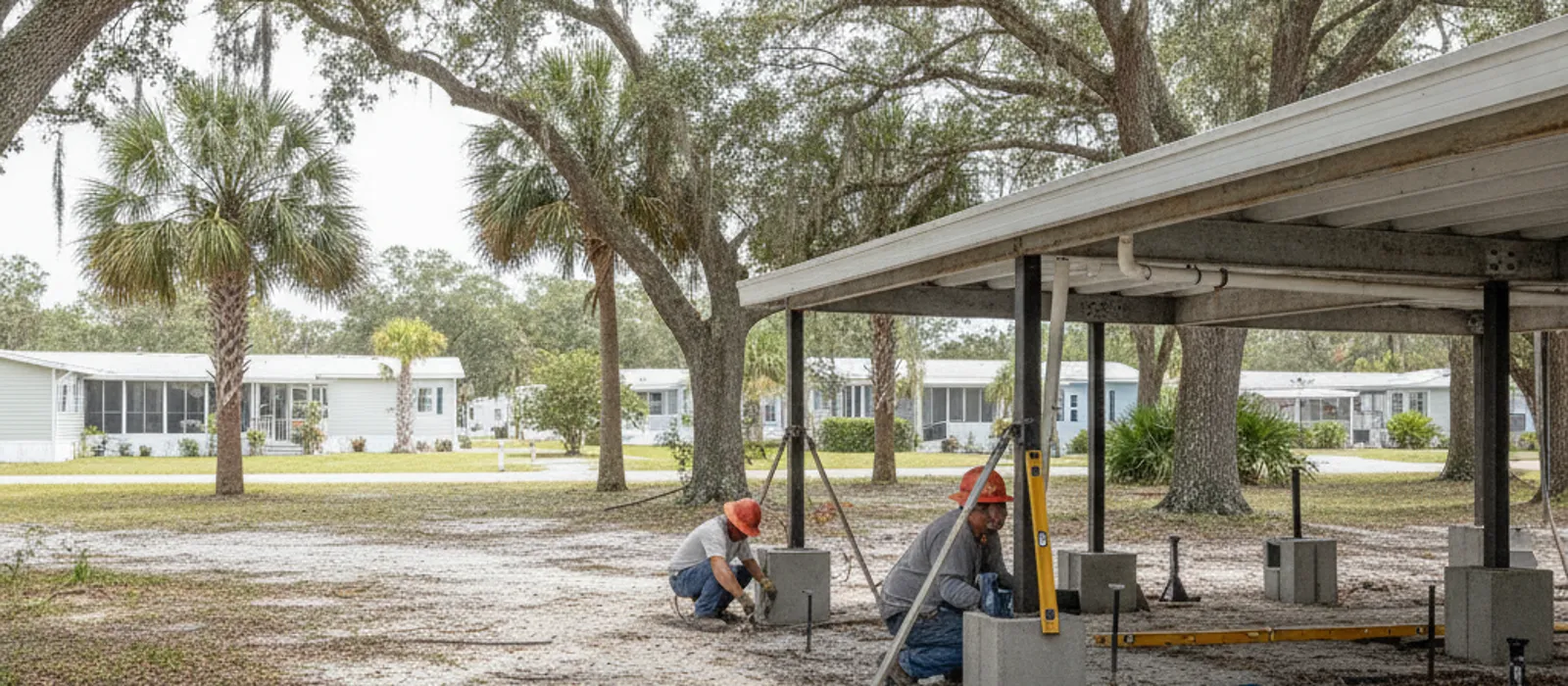
Here in Ocala and Marion County, we crawl under homes every week where the piers themselves are fine but the pads under them have cracked, tilted, or disappeared into the sand entirely. This guide covers what should actually sit under your piers, what the good materials cost, and how to spot trouble before it gets expensive.
What Mobile Home Pier Pads Actually Do
A pier pad, sometimes called a footing, has one job: spread the load. A concrete block pier is roughly 8 by 16 inches. Push that small footprint into loose Central Florida sand with 3,000 or 4,000 pounds on top of it and it punches downward like a heel in wet grass.
A pad underneath spreads that same weight over a bigger area, usually 16 by 16 inches up to 24 by 24 inches or more. Double the surface area and you cut the pressure on the soil roughly in half. That’s the entire trick, and it’s why a home with proper pads stays level for years while a home with piers stacked on bare dirt needs releveling every couple of seasons.
Florida’s installation rules take this seriously. The state requires footings sized to the soil’s load-bearing capacity, and the Florida Department of Highway Safety and Motor Vehicles oversees mobile home installation standards through its licensed installer program. Federal rules in HUD’s Model Manufactured Home Installation Standards (24 CFR Part 3285) spell out footing requirements too, including sizing footings to the soil and protecting them from frost, which thankfully isn’t our problem in Ocala.
The short version: pads aren’t optional, and “the blocks seem sturdy” isn’t the same as “the home is supported correctly.”
Not sure what’s under your home right now? Request a free written estimate and we’ll crawl under, photograph every pier, and tell you exactly what you’re sitting on. Or call us at (352) 820-4441.
Pier Pad Materials Compared: Concrete, ABS, and What to Avoid
Walk under ten mobile homes in Marion County and you’ll find at least five different things pretending to be pier pads. Some belong there. Some really don’t.
Precast concrete pads are the traditional choice. They’re heavy, they don’t degrade, and they hold shape under load. The downside is weight. A 16x16x4 pad runs 85 to 100 pounds, which matters when someone’s dragging forty of them through a 24-inch crawl space.
ABS plastic pads are the modern standard for most installs. They’re engineered polymer, usually ribbed on the underside to grip soil, and a 16x18 pad weighs a few pounds instead of ninety. Good ones are rated for specific loads and approved for use under Florida installations. They won’t crack like concrete can, and they don’t wick moisture.
Poured concrete footings are the heavy-duty option, required for permanent foundation conversions and common under heavier double wide and triple wide setups. They cost the most but they’re the closest thing to a site-built foundation footing.
What to avoid: wood scraps, landscape pavers, patio stepping stones, and stacked bricks. Wood rots in our humidity, usually within a few years. Thin patio pavers are made for foot traffic, not point loads, and they snap. We find broken pavers under sunken piers constantly. If a previous owner or a cut-rate installer used them, plan on replacing them.
| Pad Type | Typical Size | Cost Per Pad (Material) | Installed Per Pier | Lifespan |
|---|---|---|---|---|
| ABS plastic pad | 16x18 to 24x24 in | $15 - $40 | $40 - $90 | 30+ years |
| Precast concrete pad | 16x16 to 24x24 in | $20 - $60 | $50 - $120 | 40+ years |
| Poured concrete footing | 20x20 in and up | $75 - $150 | $150 - $350 | 50+ years |
| Patio pavers (avoid) | 12x12 in | $2 - $8 | Not code-appropriate | Often under 10 years |
| Wood blocking (avoid) | Varies | Scrap | Not code-appropriate | 3 - 8 years in FL humidity |
Prices are typical ranges we see in the Ocala area. Your soil, home weight, and access can move these numbers, which is why we put everything in a written estimate before work starts.
Why Florida Sand Makes Footings a Bigger Deal Here
Soil load capacity is measured in pounds per square foot. Dense clay or compacted gravel might carry 3,000 psf or more. A lot of Central Florida is fine sand that tests closer to 1,000 to 1,500 psf, and it gets worse when it’s saturated.
That’s the catch with our summers. From June through September, afternoon storms dump inches of rain, water moves through sand fast, and the soil under your pads briefly loses a chunk of its bearing strength. A pad that’s borderline in April can start settling in August. We wrote more about that cycle in our post on why mobile homes settle in Florida.
Bigger pads are the fix. On weak soil, Florida installation tables push you toward larger footings, sometimes double pads or poured footings under the heaviest points like marriage line piers on a double wide. An installer who sizes every pad the same regardless of soil is guessing, and your floors will eventually tell you how the guess went.
Drainage matters just as much. If water pools under your home after storms, your pads are sitting in soup for days at a time. Fixing gutters, grading, and skirting ventilation protects the footings as much as it protects the belly board. If you’re seeing standing water down there, read our guide on water under a mobile home before it becomes a leveling problem.
Real Homes, Real Numbers: Pad Failures We’ve Fixed
Belleview: Ray called us about a back door that wouldn’t latch and a hump in the hallway floor. Under his 1998 double wide we found the previous owner had set six piers on 12-inch patio pavers. Four had snapped clean through and the piers had sunk almost two inches. We replaced pads under nine piers with 20x20 ABS pads, shimmed, and releveled the home for $1,850. The door latched the same afternoon.
Silver Springs: Donna bought a single wide as a rental and her four-point inspection flagged “inadequate pier footings.” Half the piers sat on bare sand, no pads at all. We installed proper pads under all 22 piers and releveled for $2,400, and her insurance carrier accepted the corrected setup with our photo documentation. Without it, she was looking at losing coverage on the policy.
Summerfield: A retired couple, the Hendersons, had releveled their home twice in five years with a handyman who kept adding shims but never looked at the footings. The real problem was undersized pads on soft, wet soil near a low corner of the lot. We upsized to double pads on the worst eight piers, corrected the grading issue, and releveled for $2,950 total. Three years later the home hasn’t moved. The two “cheap” relevels before that had already cost them about $1,400 combined and fixed nothing.
The pattern in all three: the visible symptom was a leveling problem, but the actual failure was under the piers, not in them.
Signs Your Mobile Home Pier Pads Are Failing
You don’t need to crawl the full length of your home to catch early warnings. Start with the symptoms inside:
- Doors that stick or won’t latch, especially after heavy rain. Our post on doors that won’t close walks through why this is usually a support issue.
- Floors that slope, bounce, or dip near exterior walls or the marriage line.
- Cracks opening up at drywall seams, window corners, or vinyl wall panel joints.
- Skirting that’s buckling or pulling away, which often means the home has shifted on its supports.
If you do look underneath with a flashlight, here’s what failing pads look like:
- Piers leaning out of plumb. A tilted pier usually means the pad under it settled unevenly.
- Cracked or split pads, especially thin concrete or pavers.
- Pads sunk below grade with soil pushed up around the edges.
- Daylight between the pier cap and the frame, or shims stacked more than an inch thick.
- Wood blocking that’s soft, dark, or crumbling.
One caution here. Look, but don’t fix. Never jack a mobile home yourself or pull piers to swap pads. A home can shift off its supports with deadly force, and DIY jacking is one of the most dangerous projects a homeowner can attempt. We covered the risks in detail in our post on DIY mobile home leveling. Spotting the problem is your job. Getting under thousands of pounds of home is ours.
If any of those signs sound familiar, get on our schedule for a free inspection. We photograph everything and give you a written estimate, and there’s no charge to find out where you stand.
What Proper Pad Installation Looks Like
When we replace or install mobile home pier pads as part of a mobile home leveling job in Ocala, the sequence matters as much as the materials.
First, the soil gets prepped. That means removing organic material like grass, roots, and mulch under each pad location, then leveling and compacting the spot. A perfect pad on fluffy disturbed soil settles just like a bad pad on firm soil.
Second, the pad gets sized to the load. Marriage line piers, piers under heavy points like water heaters and porches, and perimeter piers all carry different weights. Heavier points get bigger pads or doubled pads. This is also where soil condition changes the math, since softer ground needs more surface area.
Third, the pier gets rebuilt plumb on the new pad, capped, and shimmed tight to the frame. Hardwood shims go in at the top, driven snug, never stacked loose. Then the whole home gets checked with a water level or laser so every pier shares the load evenly. A single tight pier surrounded by loose ones just becomes the next pressure point.
Finally, we check the tie-downs. Anchors and straps work together with the piers, and a home that’s been settling often has slack or misaligned straps. Since Florida requires tie-downs on every installed mobile home, it’s worth having them inspected in the same visit. That’s a core part of our tie-down service in Ocala, and it matters for both storms and insurance paperwork.
Expect a full pad replacement and relevel on a single wide to take most of a day. A double wide with extensive pad problems can run two days. If you’re budgeting, our breakdown of mobile home pier replacement costs covers what moves the price up or down.
How Often to Check Under Your Home
Twice a year is the rhythm we suggest for Marion County homes: once in spring before the rainy season, once in fall after it. You’re looking for the failure signs above, plus standing water, torn belly board, and shifted skirting.
Add a check after any major storm, and always before you buy or sell. A pre-purchase crawl-under has saved more than one of our customers from inheriting a $3,000 problem, and sellers who fix pad issues before listing avoid the mid-contract renegotiation that inspection findings trigger.
If your home has been releveled more than once in five years, stop treating the symptom. Something under the piers is wrong, whether it’s undersized pads, bad soil prep, or drainage, and finding it costs a lot less than the third relevel. Our post on how often a mobile home needs releveling explains what normal looks like versus what signals a support problem.
One phone call gets you real answers: (352) 820-4441. We serve Ocala, Belleview, Silver Springs, Summerfield, Dunnellon, Lady Lake, Citra, and the surrounding areas across Marion, Sumter, and Citrus counties, with free written estimates and a 24/7 line for pre-closing and insurance deadlines.
Frequently Asked Questions
What size should mobile home pier pads be?
It depends on your soil and the load each pier carries. In Central Florida’s sandy soil, 16x18 inch pads are a common minimum, with 20x20 or 24x24 pads, doubled pads, or poured footings under heavy points like marriage line piers. An installer should size pads to the soil’s bearing capacity, not use one size everywhere.
Are ABS plastic pads as good as concrete?
For most homes, yes. Quality ABS pads are load-rated, approved for Florida installations, and won’t crack or wick moisture the way thin concrete can. Poured concrete footings still win for permanent foundation conversions and very heavy setups, but for a standard pier installation, rated ABS pads are a proven choice.
Can I replace pier pads myself?
We’d strongly advise against it. Replacing a pad means lifting the home off that pier, and jacking a mobile home without the right equipment and training can cause the home to shift or drop with enough force to kill someone. Inspecting with a flashlight is safe and smart. Anything involving jacks or pier removal should go to a licensed professional.
How much does it cost to fix failing pier pads?
In the Ocala area, replacing pads under a handful of problem piers along with a relevel typically runs $1,500 to $3,000. Small jobs touching just a few piers can come in lower, while full pad replacement under a large double wide with poor access costs more. A free written estimate will pin down your exact number before any work starts.