You get a quote for $600 to relevel your mobile home, and then your neighbor leans over the fence and says, “You know you need a permit for that, right?” Now you’re not sure if this is a one-day fix or a three-week paperwork headache.
Here’s the honest answer about needing a permit to level a mobile home in Florida: it depends on what “leveling” actually involves and which county you live in. Routine releveling, where a crew adjusts shims and jacks the home back to level on its existing piers, usually doesn’t require a building permit in most Florida counties. But the moment the job grows into replacing piers, adding new supports, changing anchors, or touching the foundation system, permits often come into play.
That gray area is where homeowners get burned. So let’s walk through what Florida law actually says, how Marion County handles it, what the paperwork costs, and when you can relax because your contractor is handling all of it anyway.
The Short Answer on Leveling Permits in Florida
Florida doesn’t have one statewide rule that says “all mobile home leveling requires a permit.” Instead, two layers of rules apply.
First, the state regulates who can do the work. Under Florida Statute 320.8249, anyone who performs mobile home installation work for pay must be a licensed mobile home installer. Florida defines installation broadly, and it includes blocking, leveling, supporting, and anchoring the home. So even if no permit is required for your specific job, the person doing it should hold a state installer license or work under someone who does.
Second, your county or city decides when a permit is required. Building departments across Florida treat simple releveling differently than structural work. Most treat shim adjustments and minor jacking as maintenance. Most treat pier replacement, new anchor installation, and foundation changes as permitted work that gets inspected.
The practical takeaway: the question isn’t really “do I need a permit to level my home,” it’s “how much work does my home actually need?” A quick relevel is one answer. A relevel that uncovers crushed piers and rusted straps is another. If you’re not sure which situation you’re in, that’s exactly what a free inspection is for. Request a free written estimate or call us at (352) 820-4441 and we’ll tell you what your job involves before anyone talks paperwork.
What Counts as “Leveling” and What Counts as Structural Work
This distinction decides everything, so let’s make it concrete.
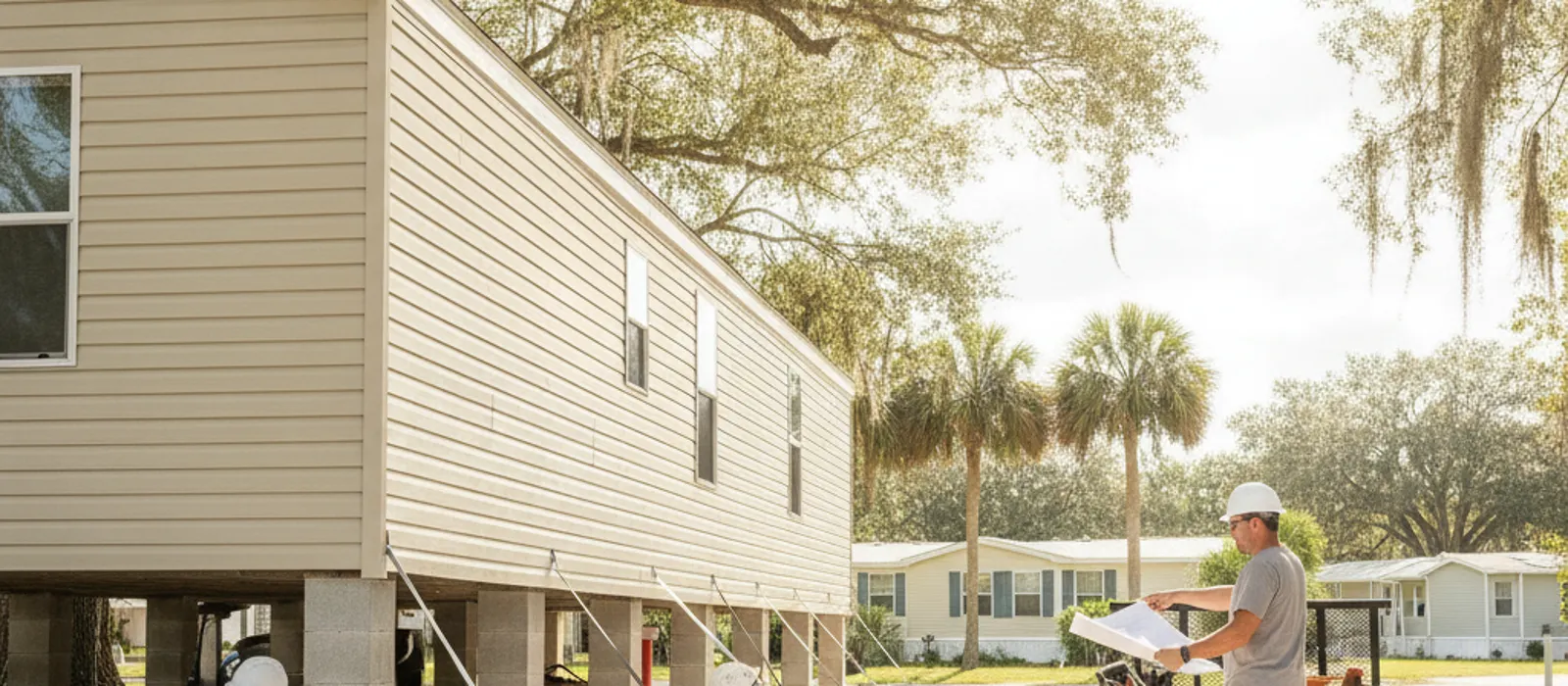
Routine releveling means the crew goes under the home with a water level or laser level, checks every pier, and adjusts shims and wedges to bring the frame back to level. The piers stay where they are. The anchors stay where they are. Nothing new gets installed. In most Florida counties, this is maintenance, not construction, and no permit is pulled. If you want to see what that process looks like step by step, we broke it down in how mobile home leveling works.
Structural setup work means something in the support system changes. Examples:
- Replacing cracked or crushed piers
- Adding piers where the frame is sagging between supports
- Installing new tie-down anchors or straps
- Repairing or replacing the footings under piers
- Converting to a permanent foundation for FHA financing
That second list is where counties typically want a permit and an inspection, because the work affects how the home handles wind loads. Florida takes wind resistance seriously for good reason, and the inspection is there to confirm the new piers and anchors meet the state’s installation standards under Rule 15C-1.
Here’s the thing most homeowners don’t realize: about a third of “leveling” jobs turn into the second category once someone actually crawls under the home. Settling is usually a symptom. The cause might be soil movement, water pooling under the home, or piers that were spaced too far apart from day one. You can read more about why that happens in our post on why mobile homes settle in Florida.
How Marion County Handles Mobile Home Leveling Permits
Let me tell you about Ray, a retired lineman in Belleview. His 1998 double-wide had the classic signs: doors rubbing, a hump in the hallway floor. He got a $550 quote from us for a relevel. Then he spent two afternoons on the phone trying to figure out if he needed a permit first, because a guy at his church swore he did.
Here’s what Ray learned, and what we tell every Marion County customer. The county building department reviews mobile home work based on scope. When we described the job as a shim adjustment on existing piers with no new supports and no anchor work, no permit was required. Ray’s job was done in about four hours, cost him $550, and the only paper involved was his written estimate and invoice.
Compare that with Donna in Summerfield. Her single-wide needed leveling too, but when our crew got underneath, six piers on the south side had sunk into soft soil and two concrete blocks had cracked clean through. Fixing that meant new footings and replacement piers, which is structural setup work. That job ran $2,400, took two days instead of one, and the permit and inspection were part of the package. Donna didn’t fill out a single form. That’s the contractor’s job, and any leveling company that asks you to pull your own permit is waving a red flag.
The lesson from both jobs: you usually can’t know which category you’re in until someone inspects the piers. Guessing from above the floor doesn’t work. If your doors are sticking or your floors slope, start with our guide to signs your mobile home needs leveling, then get eyes under the home.
One more Marion County note. If your home sits in a park, the park owner and you may split responsibility for setup work depending on your lot agreement. Check your lease before assuming the bill is all yours.
Permit Costs vs. the Cost of Skipping One
Permits for mobile home support work in Central Florida are not expensive. The risk of skipping a required one is. Here’s how the numbers typically stack up in our service area:
| Situation | Permit usually needed? | Typical permit cost | Typical job cost |
|---|---|---|---|
| Relevel on existing piers (shims only) | No | $0 | $450 to $1,200 |
| Replace or add piers | Often yes | $75 to $250 | $1,500 to $4,000 |
| New tie-down anchors or straps | Often yes | $75 to $250 | $1,500 to $3,500 |
| Permanent foundation conversion | Yes | $150 to $400 | $8,000 and up |
| Relocating and setting the home | Always | $250 to $500 | $5,000 and up |
These are ballpark figures. Every county sets its own fee schedule, and job costs swing with the size of the home and the condition of the soil. For a deeper look at what drives the price, see mobile home leveling cost factors.
Now the other side of the ledger. Skipping a required permit can cost you three ways:
- Fines and double fees. Counties can charge after-the-fact permit fees, often double the normal rate, when unpermitted work is discovered.
- Insurance trouble. If your insurer or a four point inspector finds unpermitted anchor or pier work, you can lose coverage or fail the inspection at the worst possible time, usually right before a sale. Our post on the four point inspection for mobile homes covers what inspectors look for.
- Closing delays. Title and lender reviews can flag unpermitted structural work, and buyers use it to negotiate the price down.
Miguel in Dunnellon learned this the expensive way before he ever called us. A handyman had “leveled” his home two years earlier for $300 cash, which included wedging a couple of extra block stacks under the frame with no footings and no permit. When Miguel went to sell, the buyer’s inspector flagged the supports, the deal stalled, and Miguel paid us $3,200 to redo the piers correctly with the county sign-off, plus he ate a three-week closing delay. The $300 bargain ended up costing more than ten times its price.
If you’re staring down a deadline like that, don’t wait on hold with the county. Call our line at (352) 820-4441. We keep a 24/7 emergency line specifically for pre-closing inspections and insurance deadlines, and we can usually tell you within one site visit whether your fix needs a permit at all.
Why the Installer License Matters More Than the Permit
Homeowners fixate on permits, but the state installer license is the piece that protects you day to day.
Florida requires mobile home installers to pass an exam, carry insurance, and renew their license through the state. The program exists because a mobile home’s safety in high wind depends almost entirely on how it’s blocked, leveled, and anchored. You can verify licensing requirements and look up installer information through the Florida Highway Safety and Motor Vehicles site, which oversees mobile home installation standards in the state.
Why does this matter for a “simple” leveling job? Because leveling is never just lifting. A licensed installer knows how much to jack at each point so you don’t crack drywall or twist the frame, how to spot a pier that will fail in a year, and when straps and anchors no longer meet spec. An unlicensed handyman with a bottle jack knows none of that, and the damage he causes usually shows up months later as new wall cracks and doors that won’t latch. We’ve written about those warning signs in cracks in mobile home walls.
This is also where DIY has a hard stop. Checking your own floors with a level? Great idea. Crawling under a 15,000 pound structure to jack it up yourself? Please don’t. Homes shift off jacks, and people get killed that way. There’s no permit for a DIY relevel because the state assumes you won’t be doing one.
So when you’re comparing quotes, ask two questions before you ask about price: are you a licensed Florida mobile home installer, and do you pull permits when the job needs them? If either answer wobbles, keep shopping. Our page on mobile home leveling in Ocala explains how we handle both, and if the job involves straps or anchors, our mobile home tie-down service covers the certification paperwork your insurer will want to see.
What the Process Looks Like When It’s Done Right
Here’s how a by-the-book job goes in Marion, Sumter, or Citrus County, whether or not a permit ends up being required.
Step 1: Inspection. A tech crawls the full underside, checks every pier, measures level at multiple points, and photographs anything that’s failing. You get a written estimate that says exactly what the job is: relevel only, or relevel plus repairs.
Step 2: Permit determination. If the scope is shims and adjustment only, we tell you no permit applies and schedule the work. If piers, footings, or anchors are involved, we handle the permit application with the county. You sign nothing but the estimate.
Step 3: The work. A straight relevel is usually done in half a day. Pier replacement typically takes one to two days. We covered timelines in detail in how long mobile home leveling takes.
Step 4: Inspection and paperwork. On permitted jobs, the county inspector signs off. You keep that record. It’s gold when you sell the home or when an insurance inspector asks about the support system.
Step 5: Your records. Permit or not, keep your written estimate, invoice, and any photos. Future buyers and four point inspectors love documented work, and it turns “who did this?” into a thirty-second answer.
Total homeowner effort in that whole process: one phone call and one signature. That’s how it should be. If a contractor makes the permit sound like your problem, they’re either unlicensed or planning to skip it.
Ready to find out which kind of job your home needs? Get a free written estimate and we’ll put the scope, the price, and the permit answer in writing before you commit to anything.
Frequently Asked Questions
Do I need a permit just to relevel my mobile home on its existing piers?
In most Florida counties, no. Adjusting shims and releveling on existing supports is generally treated as maintenance rather than construction. The rules change if piers are added or replaced, or if anchors and straps are installed, so the real answer depends on what the inspection finds under your home.
Who pulls the permit when one is required, me or the contractor?
The contractor should. A licensed mobile home installer handles the application, fees, and inspection scheduling as part of the job. If a company asks you to pull an owner’s permit for their work, treat that as a warning sign, because it can shift liability for their work onto you.
Can I level my mobile home myself without a permit?
Florida’s licensing rules apply to people doing installation work for pay, so the state isn’t going to fine you for adjusting your own home. But jacking up a mobile home is genuinely dangerous, and a bad DIY lift can crack walls, twist the frame, and create bigger repair bills. Check your floors with a level all you want, then let a licensed installer do the lifting.
Will unpermitted leveling work hurt my insurance or a future sale?
It can. Four point inspectors and buyers’ inspectors look at the support and tie-down system, and undocumented or obviously improvised work raises flags that stall closings and coverage. Permitted, documented repairs do the opposite, giving you paperwork that answers questions before they’re asked.