Your steps are pulling away from the door, the lot floods every June, and the park manager keeps saying “that’s not our problem.” Sound familiar? Questions about mobile home park repair responsibility in Florida come up in our office almost every week, and the answers surprise a lot of people. Some repairs are 100 percent yours. Some are 100 percent the park’s. And a few sit in a gray zone that Florida law sorts out in ways most residents have never read.
Here’s the deal in plain English, with real numbers from real situations around Marion, Sumter, and Citrus counties.
The Short Answer: You Own the Home, the Park Owns the Land
In most Florida mobile home parks, you own the home itself and rent the lot underneath it. That single fact decides the majority of repair questions before they start.
If it’s attached to your home or part of your home, it’s yours to fix. That means the roof, the plumbing inside the home, the air conditioner, the skirting, the steps, the tie-downs, and the piers your home sits on. The park didn’t sell you the home and doesn’t insure it, so it has no duty to maintain it.
If it’s part of the land or the park’s shared systems, it’s the park’s job. That covers the roads, the common areas, the park’s water and sewer lines up to your connection point, drainage for the community, streetlights, and the clubhouse.
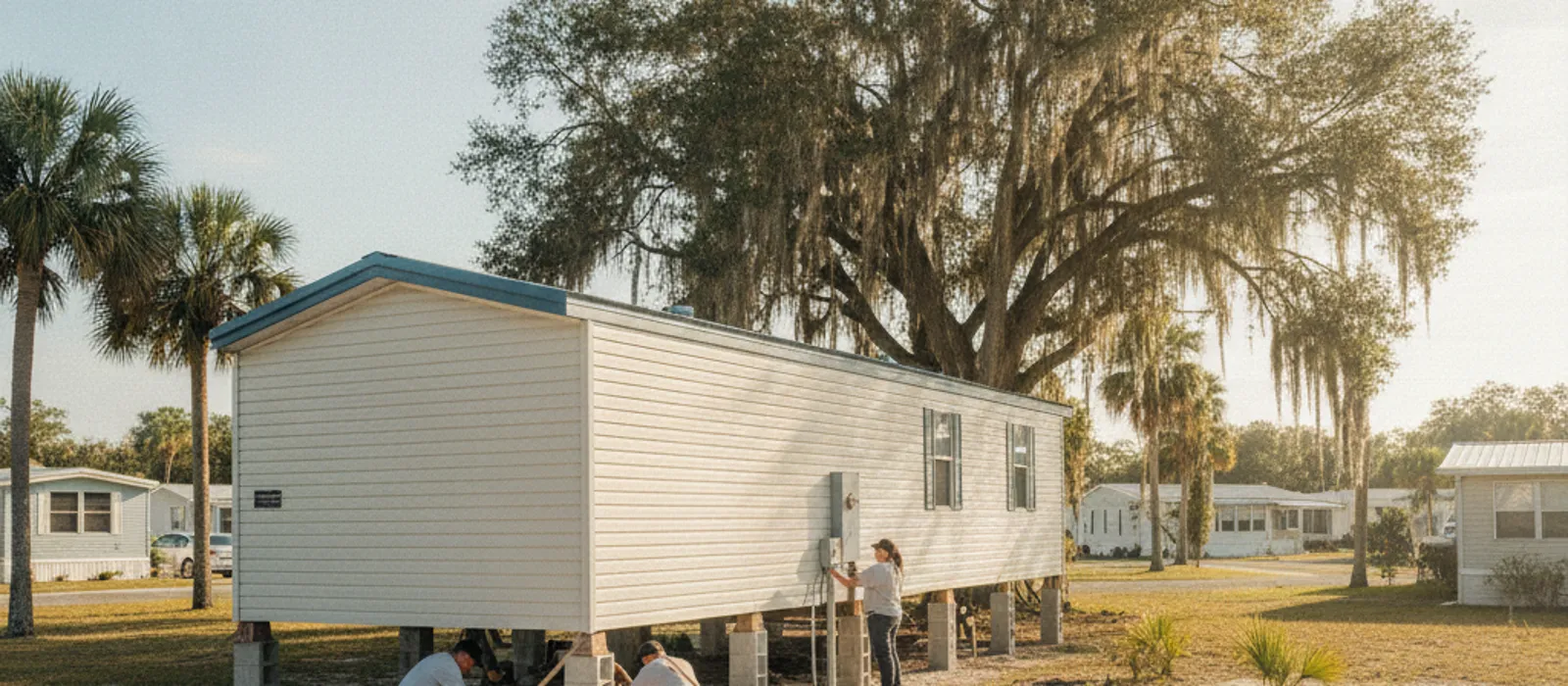
The confusion starts underneath the home. Your piers and anchors are yours, but they sit on the park’s soil. When that soil moves because of drainage the park controls, responsibility gets messy fast. We’ll get to that, because it’s where the biggest dollar amounts hide.
Not sure whether the sag in your floor is a “you” problem or a “park” problem? Call us at (352) 820-4441 and we’ll take a look. The visit comes with a free written estimate, and our report often settles the argument with the park office before it starts.
What Florida Law Says About Mobile Home Park Repair Responsibility
Florida spells most of this out in Chapter 723 of the Florida Statutes, known as the Florida Mobile Home Act. It applies to parks with 10 or more lots where residents own their homes and rent the land. You can read the full text on the Florida Senate’s statute site.
The law requires park owners to keep up their end in a few specific ways:
- Maintain the common areas. Roads, clubhouses, pools, and shared spaces have to be kept in good repair.
- Maintain utility connections. The park is responsible for its water, sewer, and electrical infrastructure up to the point where it connects to your home.
- Follow the prospectus. Every Chapter 723 park gives residents a prospectus, a legal document listing exactly what the park maintains and what you maintain. That document controls most gray-area fights.
- Give proper notice. Parks can pass certain costs to residents, but only through the notice procedures in the statute, generally with 90 days’ written notice.
Your side of the deal: maintain your home, keep the lot in the condition the prospectus requires, and follow the park rules you agreed to when you signed.
One more thing worth knowing. Florida’s Department of Business and Professional Regulation oversees mobile home parks through its Division of Florida Condominiums, Timeshares, and Mobile Homes, and it takes complaints when a park ignores its Chapter 723 duties. Filing a complaint costs you nothing.
Repairs That Are Almost Always the Homeowner’s Job
Because you own the structure, everything structural belongs to you. In our part of Florida, the split usually looks like this:
| Repair | Who Pays | Typical Cost Range in Marion County |
|---|---|---|
| Releveling the home | Homeowner | $500 to $2,500 |
| Pier replacement or repair | Homeowner | $150 to $400 per pier |
| Tie-down and anchor replacement | Homeowner | $1,500 to $4,000 full set |
| Vapor barrier repair or replacement | Homeowner | $800 to $2,500 |
| Skirting repair or replacement | Homeowner | $1,000 to $3,500 |
| Park roads and common areas | Park owner | Covered by lot rent |
| Park water/sewer lines to your connection | Park owner | Covered by lot rent |
| Community drainage systems | Park owner | Covered by lot rent |
The first five rows matter for insurance too. Florida insurers lean hard on tie-down condition and structural soundness during 4-point inspections, and “the park should fix it” is not an answer an underwriter accepts. If your carrier is asking for proof, our tie-down inspection and installation service can get you the paperwork.
Here’s a real example. Dale in Summerfield noticed his doors sticking and a slope in the hallway last spring. He assumed the park had to handle it since “the ground is theirs.” The park pointed him to his prospectus, which said homeowners maintain their own setup. Dale’s home needed a standard relevel with fresh shims and two new pier caps. Total bill: $950. Not fun, but far cheaper than the $4,000 in subfloor and door frame damage he’d have faced by waiting another year. If you’re seeing the same warning signs, our post on signs your mobile home needs leveling walks through what to check this weekend.
Repairs the Park Owner Must Handle
The park’s responsibilities are narrower than most residents hope, but they’re real and they’re enforceable:
Roads and driveways in common areas. Potholes, broken speed bumps, and crumbling park streets are the park’s problem, full stop.
Utility infrastructure. If the park’s water main breaks, the park pays. If the sewer line backs up before it reaches your home’s connection, the park pays. Once the problem is inside your home’s own lines, it flips to you.
Community drainage. Parks are responsible for the drainage systems that serve the community. This is the big one for us, because bad drainage is one of the top reasons homes in this area go out of level. Central Florida’s sandy soil washes and compacts when water sits on it, and piers settle right along with it. Our article on mobile home settling after rain explains why one wet summer can undo years of stability.
Trees in common areas. Trees on park property outside your lot are generally the park’s to maintain. Trees on your rented lot often fall to you, depending on the prospectus. Read yours before you assume anything.
Anything the prospectus promises. Some parks commit to lawn care, tree trimming on lots, or pest control. If it’s in the prospectus, the park owes it to you.
The Gray Zone: When the Park’s Problem Damages Your Home
This is where the real money gets argued over, and it’s the situation we see most often as leveling contractors.
Picture this. The park regrades a neighboring lot or lets a drainage swale clog up. Water starts channeling under your home every time it storms. Within a year, your piers have settled unevenly, your floors bounce, and there’s standing water soaking your vapor barrier.
The releveling is technically your repair, because piers and setup belong to the homeowner. But the cause was a condition the park controls. In that situation you may have a claim against the park for the damage, even though you’ll likely need to fix the home first and fight about the money second.
Linda in Lady Lake lived exactly this story. A park-owned water line leaked slowly under the edge of her lot for months. By the time anyone caught it, the soil under her home’s east side had washed out and four piers had sunk. Our crew releveled the home and reset the piers on new pads for $1,650, and she paid another $1,100 to replace the soaked section of vapor barrier. Because she had photos, our written findings, and the park’s own repair record for the water line, the park’s insurer reimbursed her the full $2,750. Without that paper trail, she’d have eaten the whole cost.
Compare that with Ray in Dunnellon, whose home settled from plain old Florida soil compaction, no park involvement at all. His relevel ran $1,200 and it was his bill alone, which is normal and fair. The difference between Linda’s outcome and Ray’s wasn’t luck. It was documentation and cause.
Three lessons from those two jobs:
- Fix the home promptly either way. A home left out of level gets worse and more expensive every month. Frame stress doesn’t wait for a dispute to resolve.
- Document before and during the repair. Photos, dates, and a contractor’s written description of the cause are what turn “he said, she said” into a reimbursement check.
- Put complaints to the park in writing. A dated letter or email about the drainage problem, sent before the damage got bad, is powerful evidence later.
If you suspect park drainage or a utility leak is behind your settling, don’t wait for the office to admit it. Request a free estimate and ask us to note the likely cause in writing. That one page has paid for the whole repair more than once.
How to Push Back When the Park Won’t Fix Its Side
If the park is ignoring a repair that’s clearly theirs, Florida gives you a process. Use it in this order:
1. Check the prospectus and your lot rental agreement. Confirm the item is actually the park’s responsibility. Plenty of disputes end here, in either direction.
2. Write a dated demand. Describe the problem, reference the prospectus section, and ask for repair by a specific date. Keep a copy. Chapter 723 disputes almost always come down to who has paperwork.
3. Work through the homeowners’ association. Parks under Chapter 723 must deal with a resident homeowners’ association on certain issues, and a complaint from the HOA carries more weight than one voice at the office window.
4. File with the state. The Division of Florida Condominiums, Timeshares, and Mobile Homes handles Chapter 723 complaints and offers mediation. It’s free to file, and parks take state letters seriously.
5. Talk to a lawyer for big-dollar damage. If park negligence caused thousands in damage to your home, a consultation is worth it. The Florida courts’ self-help resources can point you toward options if private counsel isn’t in the budget.
One thing we tell every customer in this spot: keep your own home’s maintenance current while the fight plays out. A park will happily point at your rusted anchors or torn vapor barrier to muddy the water about whose neglect caused what. Walking under your home twice a year with our underside inspection checklist keeps your side of the ledger clean.
What This Means for Your Budget
If you own a home in a Florida park, plan on these being your bills, on your schedule:
- A relevel check every couple of years in our sandy soil, more often on wet lots. What drives the price up or down is broken out in our guide to mobile home leveling cost factors.
- Tie-down and anchor upkeep, especially before insurance renewals and hurricane season.
- Vapor barrier and skirting repairs when weather, pets, or critters get to them. Our vapor barrier service handles the crawl space side of that list.
And plan on these being covered by your lot rent: roads, common areas, park utilities to your connection, and community drainage. If lot rent keeps climbing while the park skips those items, that’s exactly what the state complaint process exists for.
The good news? The homeowner-side repairs are predictable and manageable when you catch them early. A $600 relevel today beats a $5,000 subfloor and frame repair three years from now. That math works in every park from Citra to Lady Lake.
Want a straight answer on what’s wrong under your home and whose bill it should be? Ocala Level Pros serves every park in Marion, Sumter, and Citrus counties. Call (352) 820-4441 for a free written estimate, or reach us through the contact form. We’ll tell you what we see, what caused it, and what it costs, in writing.
Frequently Asked Questions
Does the park have to pay if my mobile home settles on its lot?
Usually no. Normal settling on Florida’s sandy soil is considered part of maintaining your own home, so releveling is the homeowner’s cost. The exception is when a condition the park controls, like failed drainage or a leaking park utility line, caused the settling. In that case you may have a claim for reimbursement, so document the cause before and during the repair.
Who is responsible for trees in a Florida mobile home park?
It depends on where the tree stands and what your prospectus says. Trees in common areas are the park’s responsibility, while trees on your rented lot are often yours to maintain unless the prospectus says otherwise. If a park-maintained tree damages your home, the park or its insurer is typically on the hook for that damage.
Can my park charge me for repairs to park property?
Not as a surprise bill. Chapter 723 lets parks pass through certain costs, but only using the notice procedures in the statute, generally with 90 days’ written notice. If a park tries to bill you for road work or common area repairs outside that process, object in writing and consider a complaint to the Department of Business and Professional Regulation.
Who pays for tie-downs and anchors in a mobile home park?
The homeowner does, because tie-downs are part of the home’s installation, not the land. Florida requires homes to be anchored to current standards, and insurers check tie-down condition during 4-point inspections. If yours are rusted or loose, budget roughly $1,500 to $4,000 for a full replacement set and keep the certification letter for your insurance file.