
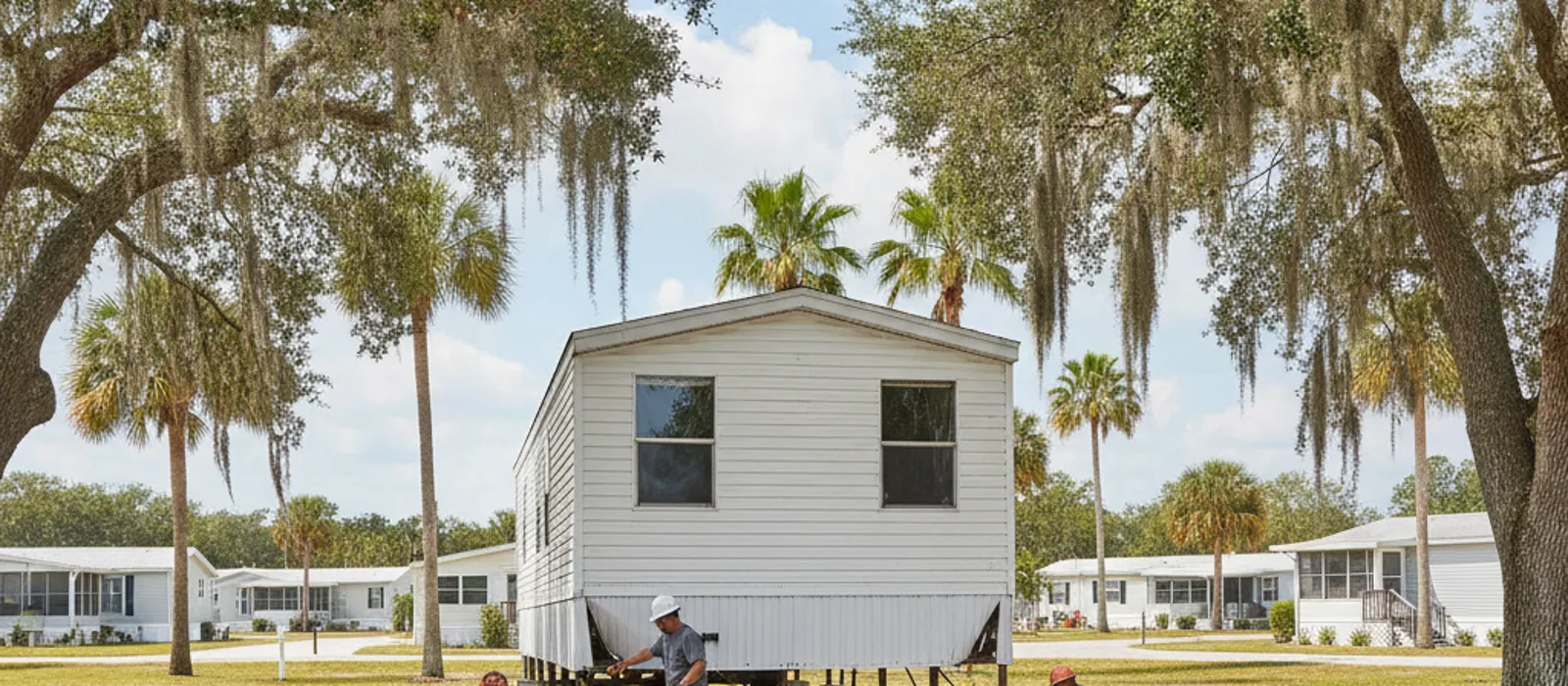
Here’s a stat that surprises most homeowners we meet: about 7 out of 10 skirting problems we get called out for in Marion County have nothing to do with the skirting itself. The panels bowed, buckled, or pulled away from the home because the home moved, not the vinyl.
That matters because mobile home skirting buckling is one of the earliest and most visible warning signs of settling. Your skirting is basically a giant level wrapped around your house. When piers sink even half an inch, the skirting is often the first thing to show it. Replace the panels without fixing the settling underneath, and you’ll be replacing them again in a year or two.
In this guide we’ll walk through why skirting buckles, how to tell whether it’s a skirting problem or a foundation problem, what each fix actually costs here in Ocala and Marion County, and when it’s safe to DIY versus when you need a pro under the home.
Why Mobile Home Skirting Buckles When the Ground Shifts
Skirting is installed to fit the gap between the bottom of your home and the ground. That gap is supposed to stay put. In Central Florida, it often doesn’t.
Your mobile home sits on piers, usually concrete blocks resting on soil. Florida’s sandy soil compacts, washes, and shifts, especially after our summer rain pattern dumps water around the perimeter of the home month after month. When a pier settles, that section of the home drops with it. The gap the skirting was cut for gets shorter, and the panels have nowhere to go but out or sideways. That’s the buckle.
The reverse happens too. If one side of the home settles, the opposite side can effectively lift relative to the skirting. Now the panels hang loose, pull out of the top track, or leave a visible gap you can see daylight through. Homeowners usually describe it as “skirting pulling away from the mobile home,” and it’s the same root cause from the other direction.
A few other clues tell you settling is the driver:
- The buckling is concentrated on one side or one corner, not spread evenly around the home
- Panels that were re-seated pop back out within weeks
- You’ve also noticed doors sticking, floors sloping, or new drywall cracks inside
- The problem showed up or got worse after a heavy wet season
If any of those sound familiar, check out our post on the signs your mobile home needs leveling. Skirting is usually just the first domino.
One Florida-specific note: heat can warp vinyl, and a mower can crack panels. Those are genuine skirting-only problems, but heat warping shows up as shallow ripples across sunny walls, and impact damage is obvious. A deep bow or a separating top track points at movement.
Not sure which one you’re looking at? Call us at (352) 820-4441 and describe what you see. We’ll tell you over the phone whether it sounds like settling, and the written estimate is free either way.
How to Tell If It’s the Skirting or the Home That Moved
You can do a rough diagnosis yourself in about 20 minutes, and none of it requires crawling under the home.
Step 1: Walk the perimeter. Note exactly where the skirting is buckled, bowed, or gapped. Sketch it on paper if that helps. Settling problems cluster. Random, scattered warping across all four sides usually points to sun damage or cheap panels instead.
Step 2: Check the top track. The skirting’s top rail attaches to the home. If the rail is still straight but the panels below it bow, the ground or the panels moved. If the rail itself dips or angles, the home’s rim is no longer level, and that’s a leveling issue.
Step 3: Look at the gap. Measure from the bottom of the siding to the ground at a few points around the home. On a level home, that measurement changes gradually with the grade. A sudden half-inch to one-inch difference over a short run is a red flag for a settled pier right behind that spot.
Step 4: Go inside. Check the rooms directly above the worst skirting section. Sticking doors, cracked corners over door frames, and that subtle “walking downhill” feeling all back up the settling theory.
Step 5: Set a marble on the floor. If it rolls consistently toward the wall with the buckled skirting, you have your answer.
Ray, a retired homeowner in Belleview, called three skirting companies about the bowed panels on the north side of his double wide. Two quoted him full replacement at around $2,800. The third told him the panels looked fine and suggested a leveling check. We found two settled piers under his north I-beam, releveled the home for $675, and refit his existing skirting for another $250. Total: $925 instead of $2,800, and the actual problem got fixed instead of covered up.
What Buckled Skirting Costs to Ignore in Marion County
Buckled or gapped skirting isn’t just cosmetic. Once panels separate, you’ve opened the door to three expensive follow-on problems.
Moisture. Gaps let wind-driven rain under the home, where it soaks the ground around your piers and speeds up the very settling that caused the gap. It also puts your vapor barrier and belly wrap at risk. Wet insulation and mold remediation under a mobile home routinely run into four figures.
Animals. An opening the width of your fist is an engraved invitation for raccoons, opossums, and stray cats. They tear belly board, nest in insulation, and chew what they find. Cleanup and repair after an animal moves in typically costs far more than the skirting fix would have.
Inspection and insurance headaches. If you sell, or your insurer orders a 4-point inspection, failing skirting invites a closer look, and inspectors who find gaps almost always go looking for the settling behind them.
Here’s how the numbers tend to stack up for homeowners in our area:
| Approach | Typical Cost (Ocala Area) | Does It Fix the Cause? | Typical Outcome |
|---|---|---|---|
| Ignore it for a year | $0 now | No | Moisture, pests, worsening settle; repairs often $2,000+ later |
| Replace skirting only | $1,400 to $3,200 | No | Looks good for 6 to 18 months, then buckles again |
| Re-seat panels yourself | $0 to $150 | No | Fine for minor cases; short-lived if home is settling |
| Relevel home + refit skirting | $500 to $1,200 combined | Yes | Skirting sits flat, gaps close, interior symptoms ease |
| Relevel + partial skirting replacement | $900 to $2,000 | Yes | Best option when panels are sun-brittle or cracked |
Gloria in Summerfield learned the middle row of that table the hard way. She replaced the skirting on her single wide twice in three years, spending about $1,900 total, because the panels “just kept warping.” When she finally called us, we found four piers that had settled between a quarter inch and an inch along one side. The relevel cost her $700, her third set of skirting has stayed flat for two years now, and her hallway floor stopped creaking as a bonus.
If you’re pricing options, our breakdown of mobile home skirting cost covers materials and labor in detail. Just read it after you’ve ruled out settling.
Want a straight answer on which column you’re in? Request a free written estimate and we’ll check the level before quoting anything.
Real Fixes: From Releveling to Skirting Repair
When settling is the cause, the fix happens in a specific order. Doing it backwards wastes money.
First, the home gets releveled. A crew checks the level along the I-beams with a water level or laser, then uses jacks to bring low spots back to spec, adjusting or shimming piers as they go. Most single wides take two to four hours; double wides usually take four to eight. Typical cost in our service area runs $450 to $900 for a standard relevel, more if piers need replacing. The HUD installation standards that govern manufactured home support and anchoring are worth a skim if you want the technical background; you can find them on HUD’s manufactured housing program pages.
Second, the cause gets addressed where possible. If water pooling against one side washed out the soil, we’ll flag drainage fixes like gutter downspout extensions or regrading. If the pier pads were undersized for the soil, that gets corrected during the relevel. Our post on mobile home settling after rain explains why Florida’s wet season does so much of this damage.
Third, the skirting gets refit. Once the home is back at its proper height, most vinyl skirting can be re-seated, re-cut, or re-tracked rather than replaced. Panels that are sun-brittle, cracked, or chewed get swapped. If your skirting is at the end of its life anyway, this is the right moment to upgrade, and our mobile home skirting service in Ocala can handle the whole package in one visit.
Fourth, the underside gets a once-over. While the crew is down there, it costs nothing extra to eyeball the vapor barrier, belly board, and tie-downs. Long-running settling often stresses anchor straps, and FEMA’s building science guidance treats the support and anchoring system as one unit. Their resources at fema.gov are a solid plain-language reference.
Mike in Dunnellon is a good example of the full sequence. After the 2025 wet season, three panels popped out of the track on the back of his home and he could see a gap under the rim joist. We releveled for $625, extended two downspouts away from the house, refit his skirting at no charge since it took twenty minutes, and flagged a torn section of vapor barrier he had repaired for $400 before it became a mold problem. Total spend was just over $1,000, and the back wall has held flat since.
Can You Fix Buckled Skirting Yourself?
Some of this is honest DIY territory. Some of it isn’t. Here’s where we’d draw the line.
Reasonable DIY:
- Re-seating a panel that popped out of its track after a storm
- Replacing a single cracked panel with a matching one from the hardware store
- Trimming vegetation and moving sprinkler heads that spray the skirting
- Extending downspouts and improving drainage away from the home
- Measuring gaps and photographing problem areas to share with a contractor
Stop and call a professional when:
- The buckling comes back after you re-seat panels
- You can see or measure a height difference along the rim of the home
- Interior symptoms show up: sticking doors, sloped floors, wall cracks
- Any part of the fix involves jacking the home or adjusting piers
We want to be direct about that last one. Releveling means lifting a structure that weighs 15,000 to 40,000 pounds on hydraulic jacks. Blocks can shift, jacks can kick out, and being pinned under a home is not a survivable mistake. Professionals carry the right jacks, cribbing, and insurance for a reason. Skirting panels, yes. Jacks, no.
There’s also a paperwork reason to use a pro. In Florida, work on the support and anchoring system ties into your tie-down certification, which insurers ask about during 4-point inspections. A documented relevel from a licensed company is an asset when you sell or renew a policy. A DIY jack job is a question mark at best.
What a Skirting and Leveling Inspection Looks Like
If you call us about buckled skirting, here’s exactly what happens, so there are no surprises.
First, we walk the perimeter with you: which panels are bowed, where the track has separated, and what the gap measurements say. You point out anything you’ve noticed inside.
Second, we check the level with a water level or laser reading along the frame at multiple points. This is the step that tells us definitively whether the home has moved, and you get real numbers, not a vague “yeah, it’s settled.”
Third, we look underneath at pier condition, shim stacks, pad contact, vapor barrier, and visible tie-down hardware. If we spot something outside our scope, like suspected sinkhole activity, we’ll point you to the right specialist.
Fourth, you get a free written estimate that separates the leveling work from the skirting work, with line-item prices. It’s yours to shop around with, and some folks do the skirting refit themselves after we relevel. That’s fine with us.
The whole visit usually takes under 90 minutes. If the home checks out level and the skirting really is just tired vinyl, we’ll say so.
We serve Ocala, Belleview, Summerfield, Silver Springs, Dunnellon, Lady Lake, Citra, and the surrounding parts of Marion, Sumter, and Citrus counties. If your skirting is bowing, gapping, or pulling away, don’t wait for the wet season to make it worse. Call (352) 820-4441 or request your free written estimate online. We also run a 24/7 line for pre-closing inspection deadlines, because real estate contracts don’t wait for business hours.
Frequently Asked Questions
Does buckled skirting always mean my mobile home is settling?
No, but it’s the most common cause we find in Marion County. Heat warping, impact damage from mowers, and poorly cut panels can all buckle skirting on their own. The tell is the pattern: settling causes buckling concentrated in one area, often paired with sticking doors or sloped floors inside, while heat and installation problems tend to be scattered and shallow.
How much does it cost to fix skirting that’s pulling away from a mobile home?
If the panels just need re-seating, it might cost nothing but an afternoon. If the home has settled, plan on $450 to $900 for a standard relevel in the Ocala area, plus $150 to $400 to refit or partially replace skirting. Full skirting replacement runs $1,400 to $3,200 for most homes, which is why it pays to rule out settling before buying new panels.
Can I just push the skirting panels back into the track?
You can, and for storm-related pop-outs that’s often all it takes. But if the same panels come loose again within a few weeks or months, the gap they’re spanning has changed size, and that means the home moved. At that point, re-seating panels is treating the symptom, and it’s time for a leveling check.
How fast should I deal with skirting gaps?
Sooner than feels urgent, honestly. Open skirting lets rain soak the soil around your piers, which accelerates settling, and it gives animals a way under the home where they can damage insulation and the belly board. Most homeowners who wait a year end up paying two to three times more than the original fix would have cost.